A basic guide for OG-107 shirts; I will try to illustrate three basic patterns, private purchase, and tailor-made shirts.
Often referred to as the “sateen shirt”, this was the basic work utility uniform (fatigues) of all branches of the United States Armed Forces. Used from 1952 to late 80s.
OG-107 is an abbreviation of US Army coloring code Olive Green shade 107. Previously during HBT era, US Army use the Olive Drab #8/Sage Green and Olive Drab #7/Dark Shade colors for their uniform.
The second version is OG-507, introduced and came into use in 1975 and was in production until 1989. It is a poly-blend instead of all cotton like its predecessor (I’m not illustrating this since I don’t have any in my collection).
#1 OG-107 Shirt Type I (1952–1963)
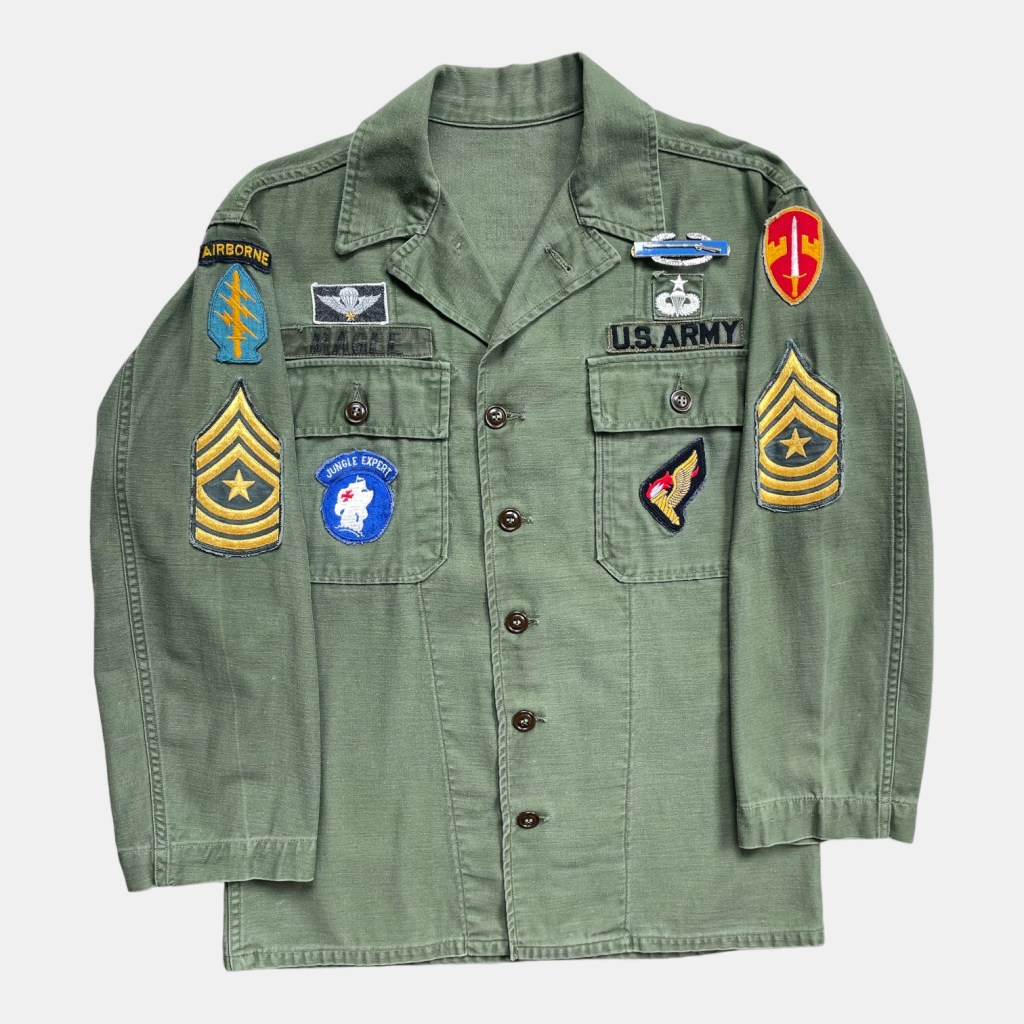
Introduced in 1952–in general, this shirt featured:
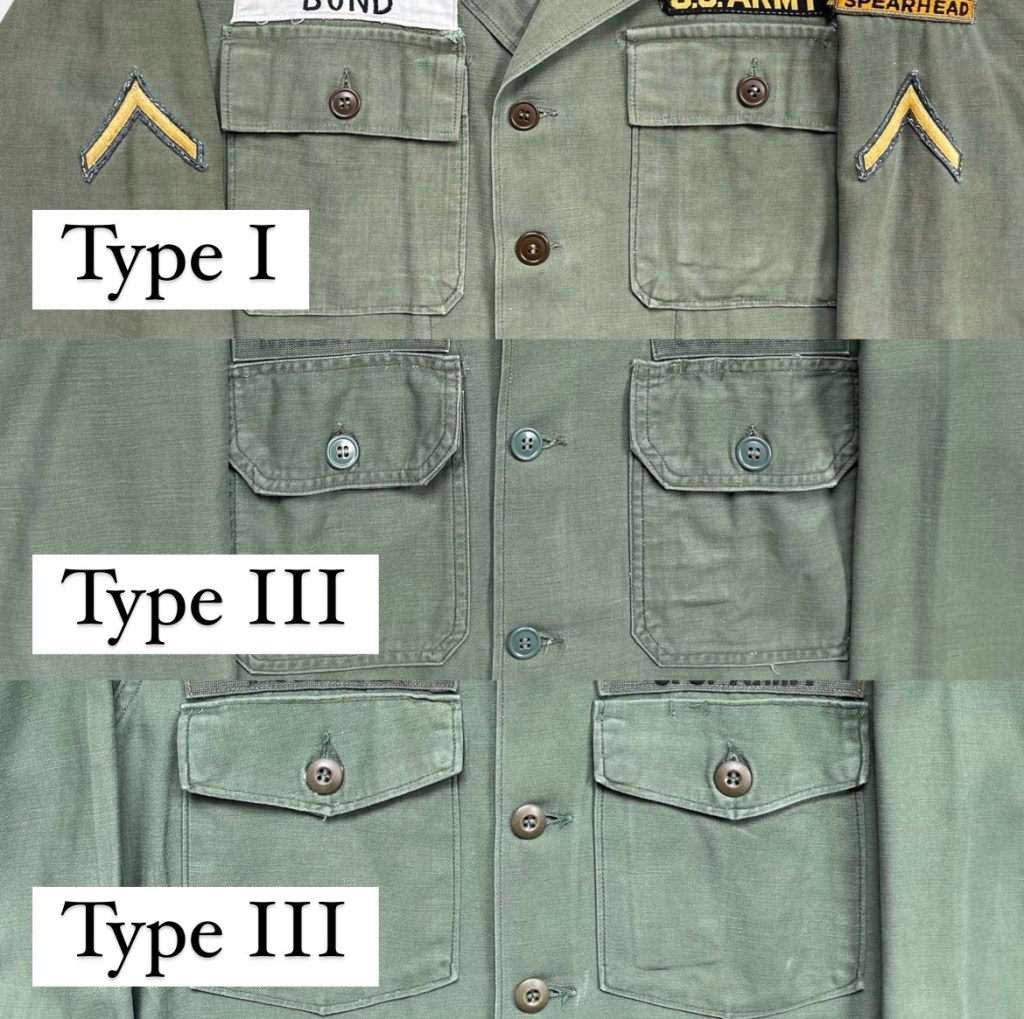
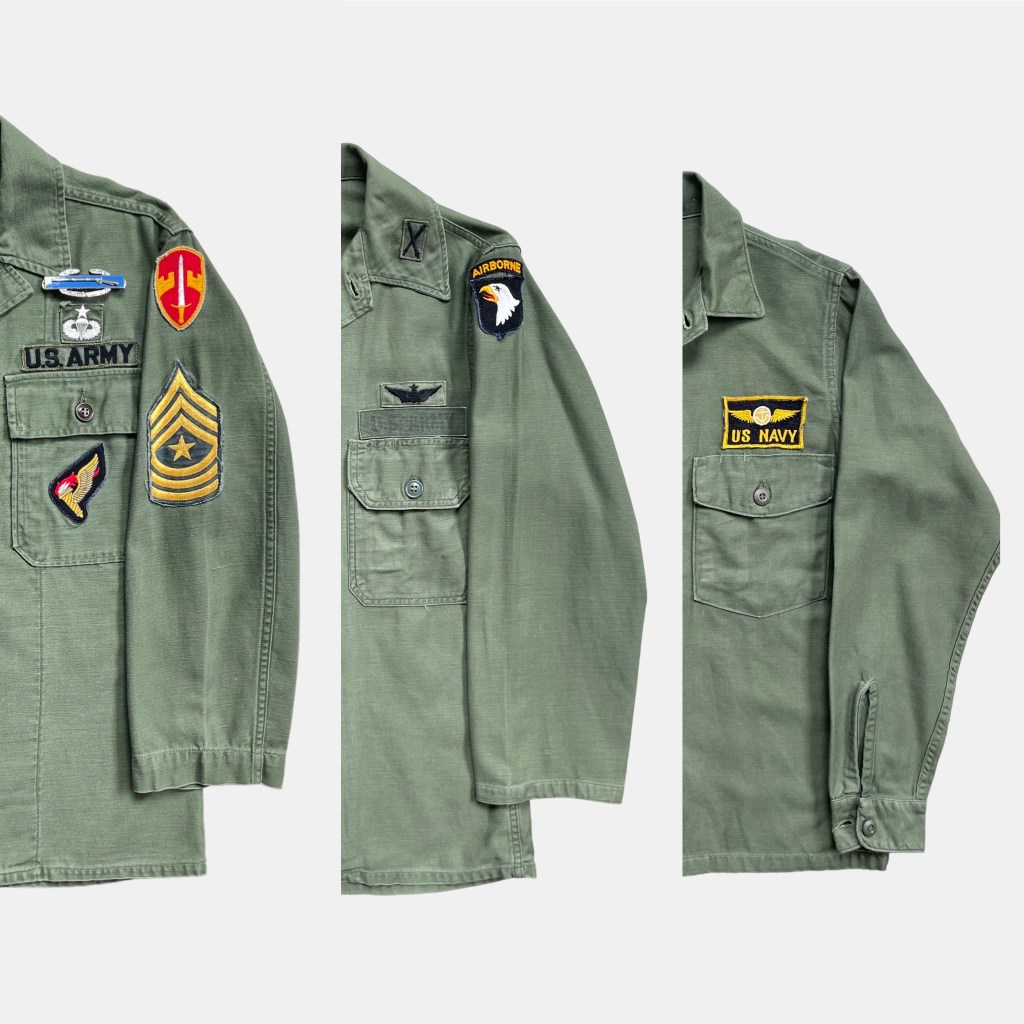
1. Straight Pocket Flaps.
2. “Straight line” for 2nd button (from the top) with pocket buttons.
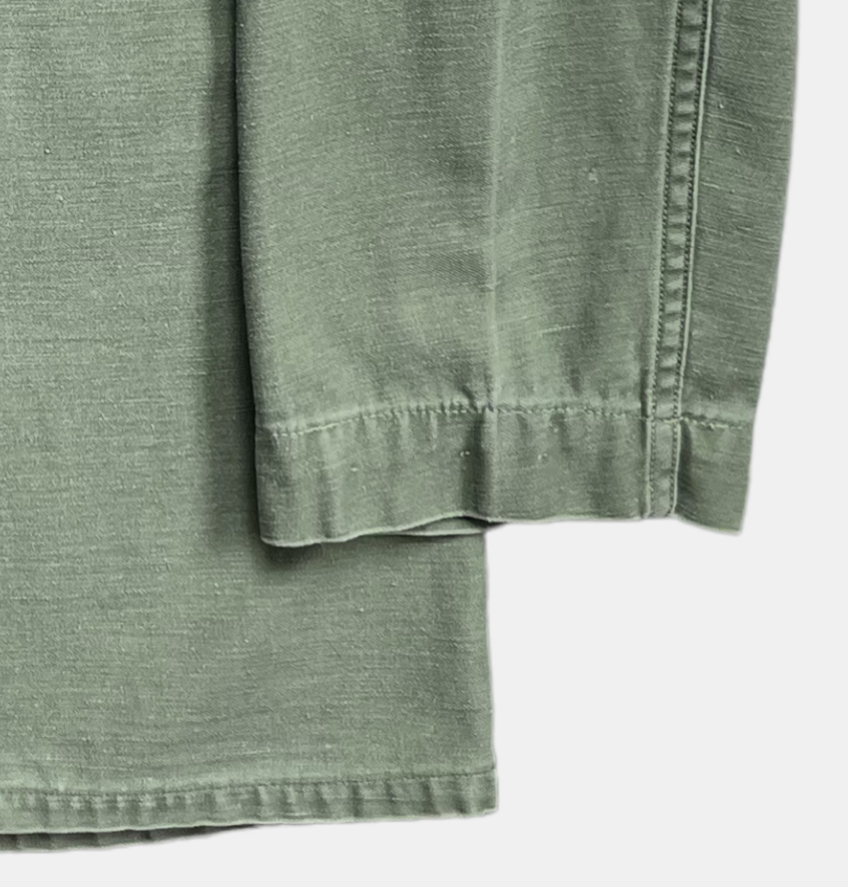
3. Straight/plain cuff.
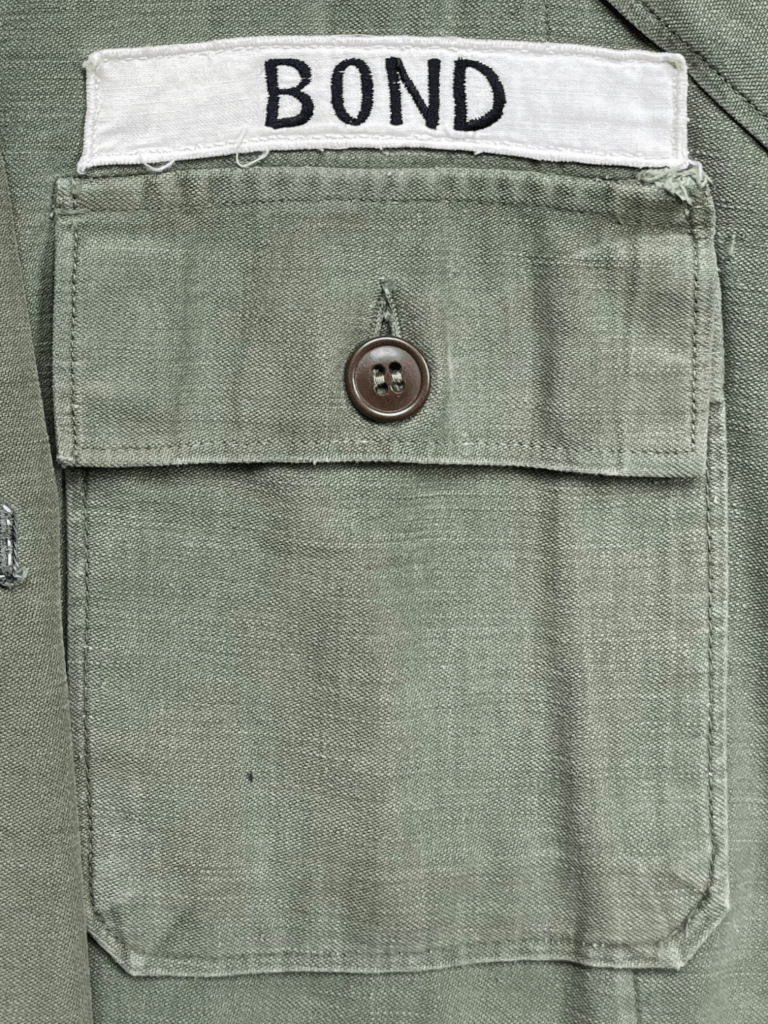
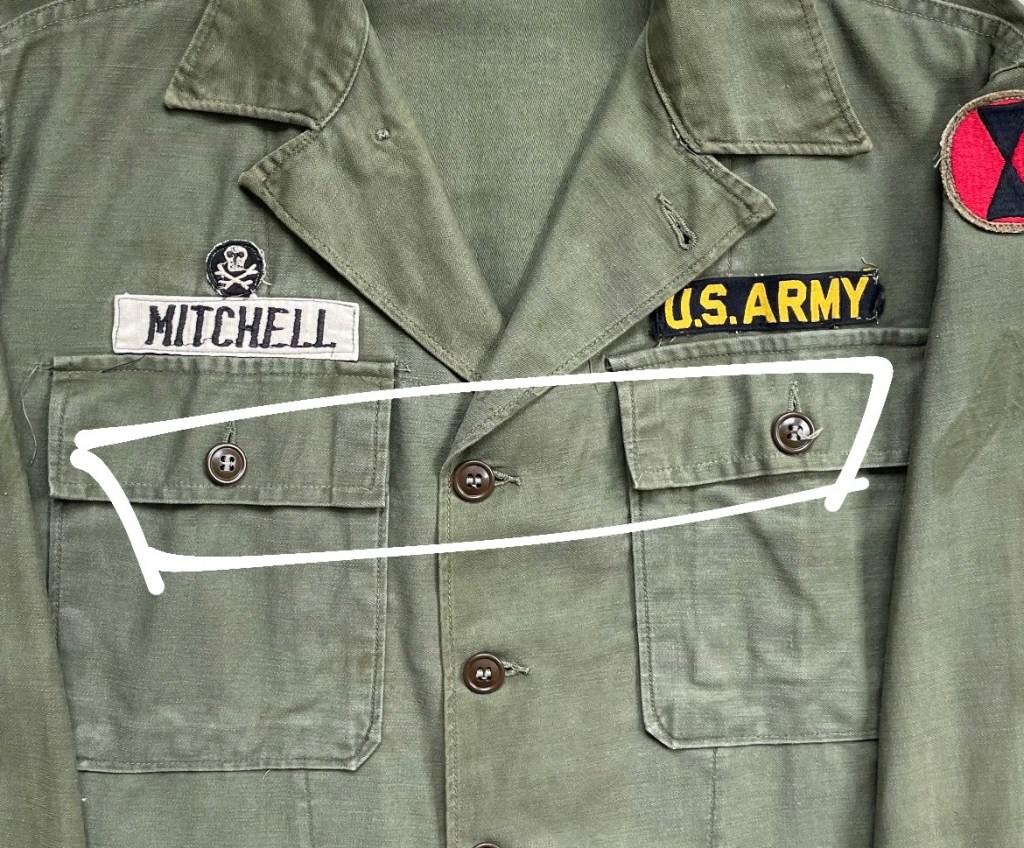
The OG-107 shirts featured “dished” style buttons. A notable detail is that dark brown buttons were commonly used in the 1950s production, while a switch to dark green buttons occurred in the 1960s production.
Sized in groups, e.g. Small, Medium, Large.
#2 OG-107 Shirt Type II (1963-1964)
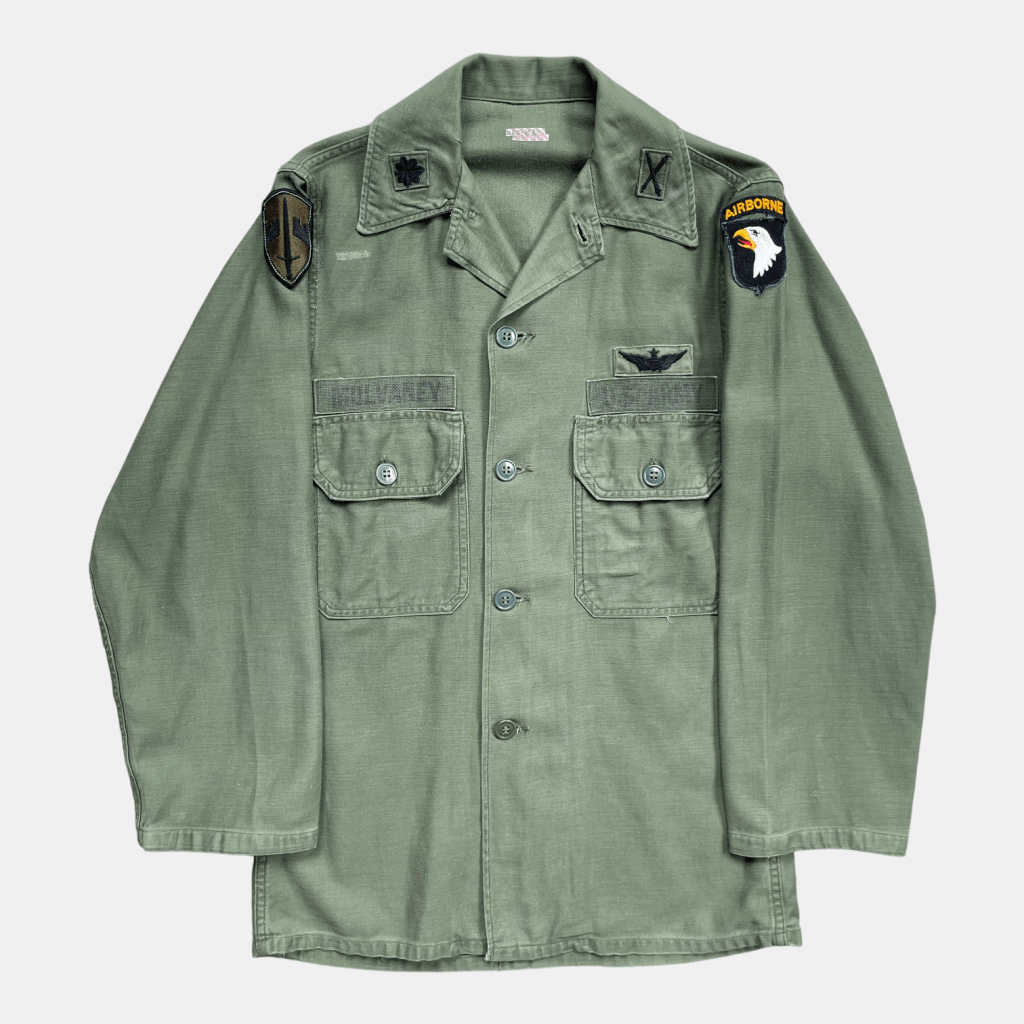
The OG-107 Type 2 shirt began production in April 1963, a decade after the introduction of the Type 1. However, its production was short-lived, lasting only one year.
During this time, a variety of patterns were available, but the notable feature that distinguished the Type 2 was the presence of “clipped” pocket flaps.
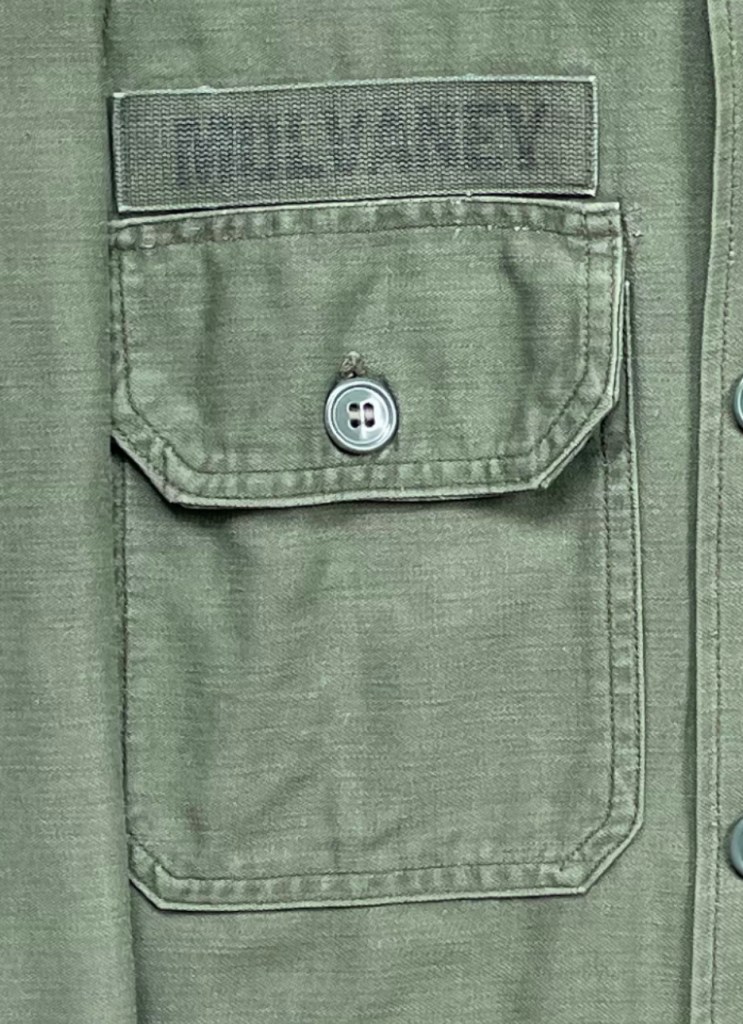
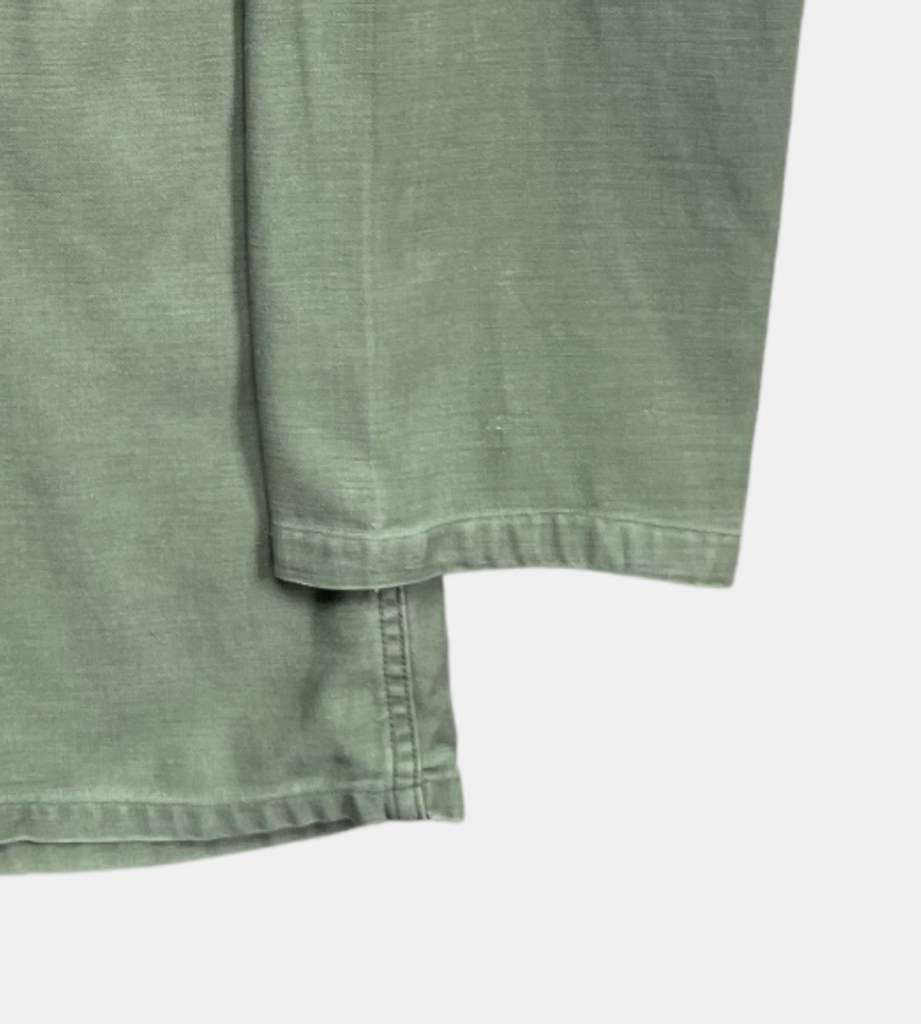
Same as Type I, still use group sizing and most of them are straight cuff.
#3 OG-107 Shirt Type III (Start 1964)
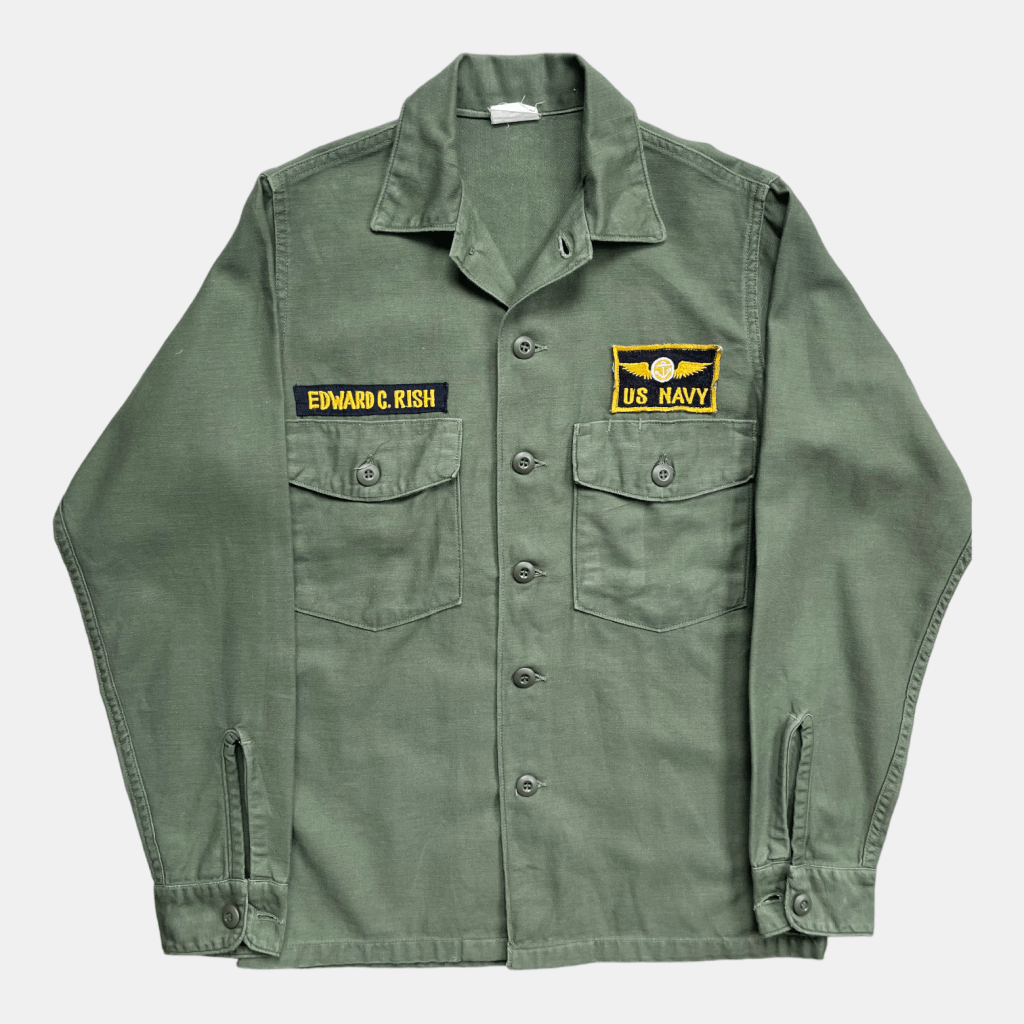
The last pattern of sateen shirt. In short, this cut is very similar to a modern shirt, Features:
1. Pointed pocket flap.
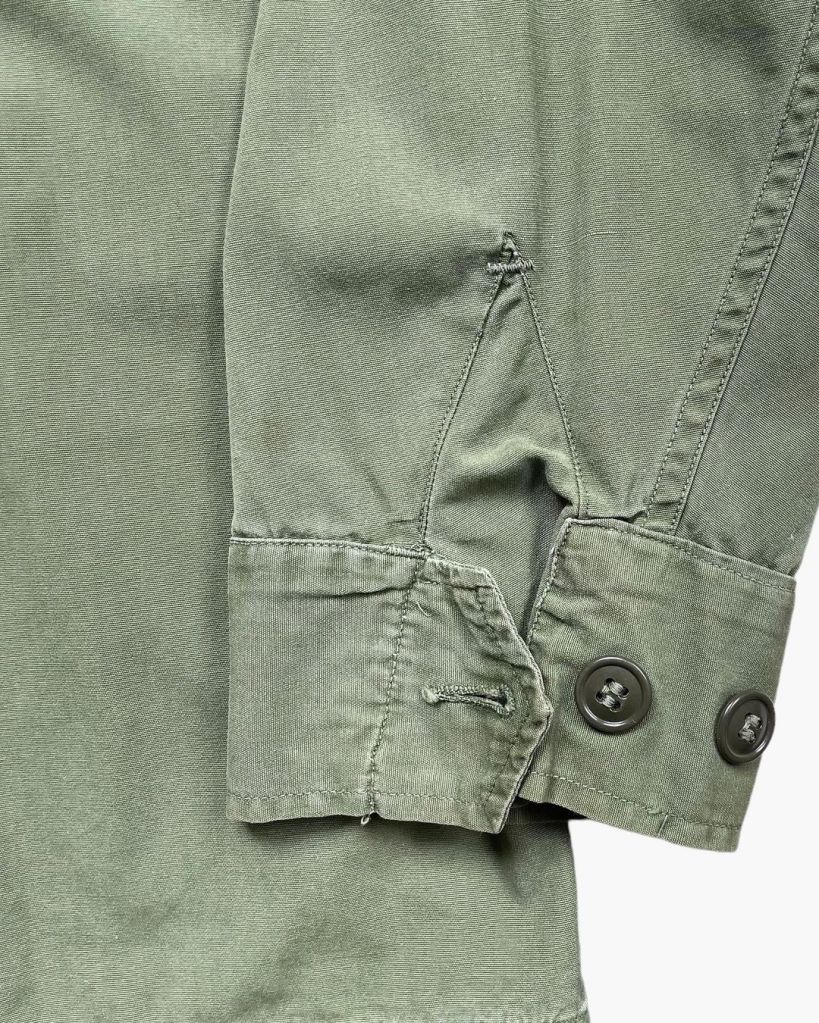
2. Button cuff.
3. Standard dull plastic button.
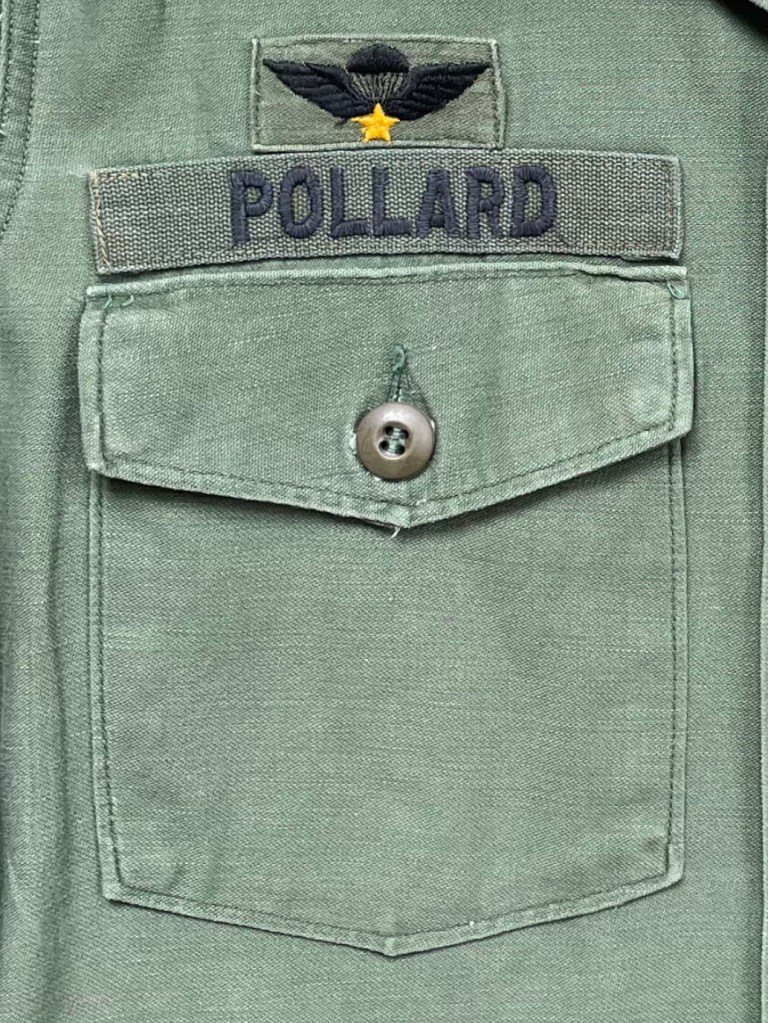
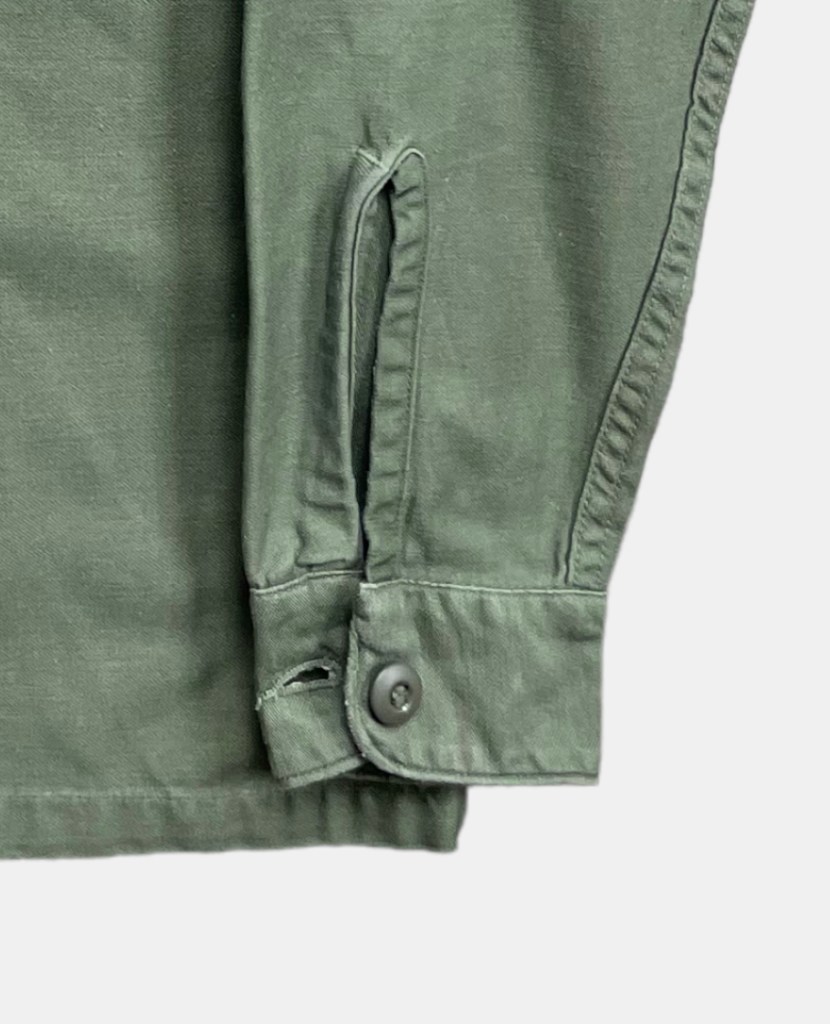
In type III, true measurements were used instead of group sizing. Shirts were marked in neck size and sleeve length (15.5″ x 32″ would show a shirt with a 15.5″ neck and a 32″ sleeve length).
Differentiate
Pockets:
Sleeve cuff:
Private purchase and Tailor-made
In addition to the standard issued type of uniforms, there were other variations available with distinct differences. Some of the main variations include:
1. Private purchase: These are shirts that were privately bought from PX stores. Many of these shirts have manufacturer tags such as Fruit of the Loom, BVD, or Guaranteed Trooper (all of which were available in the PX).
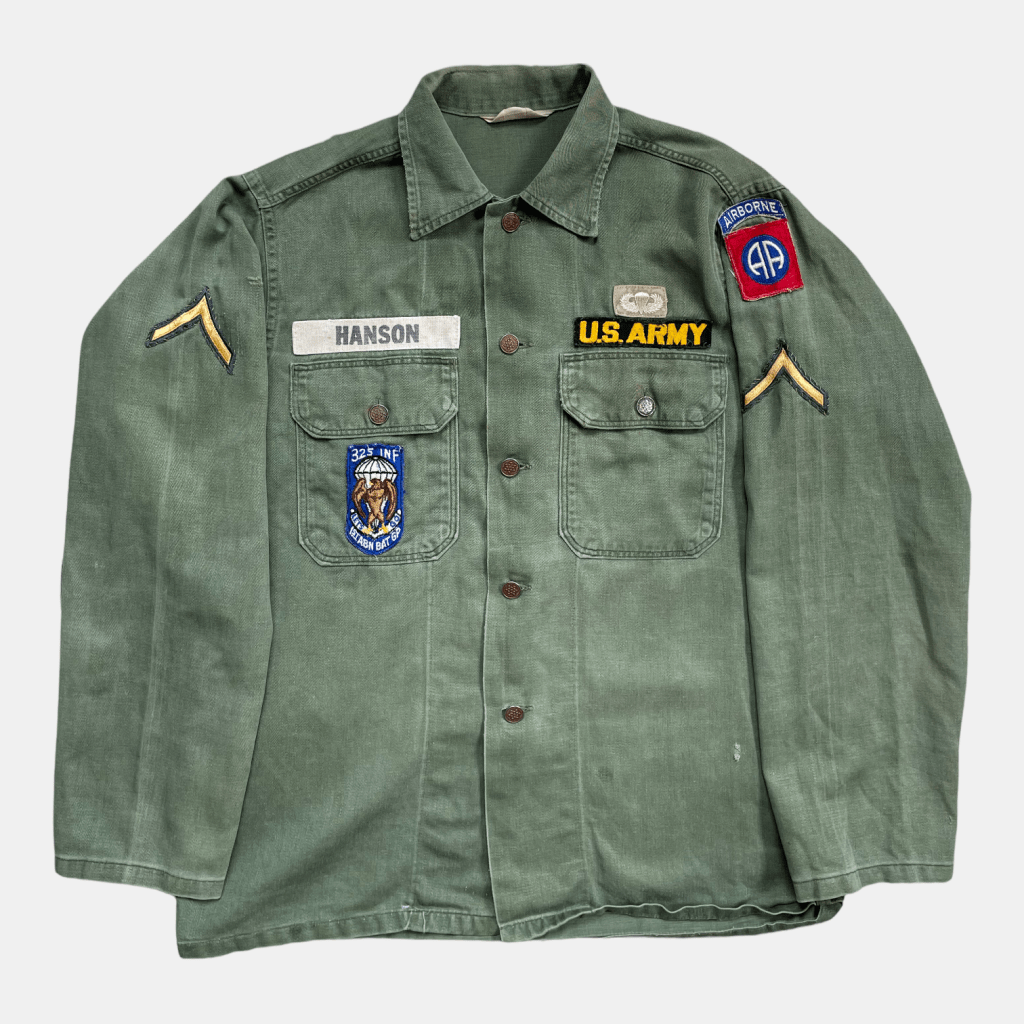
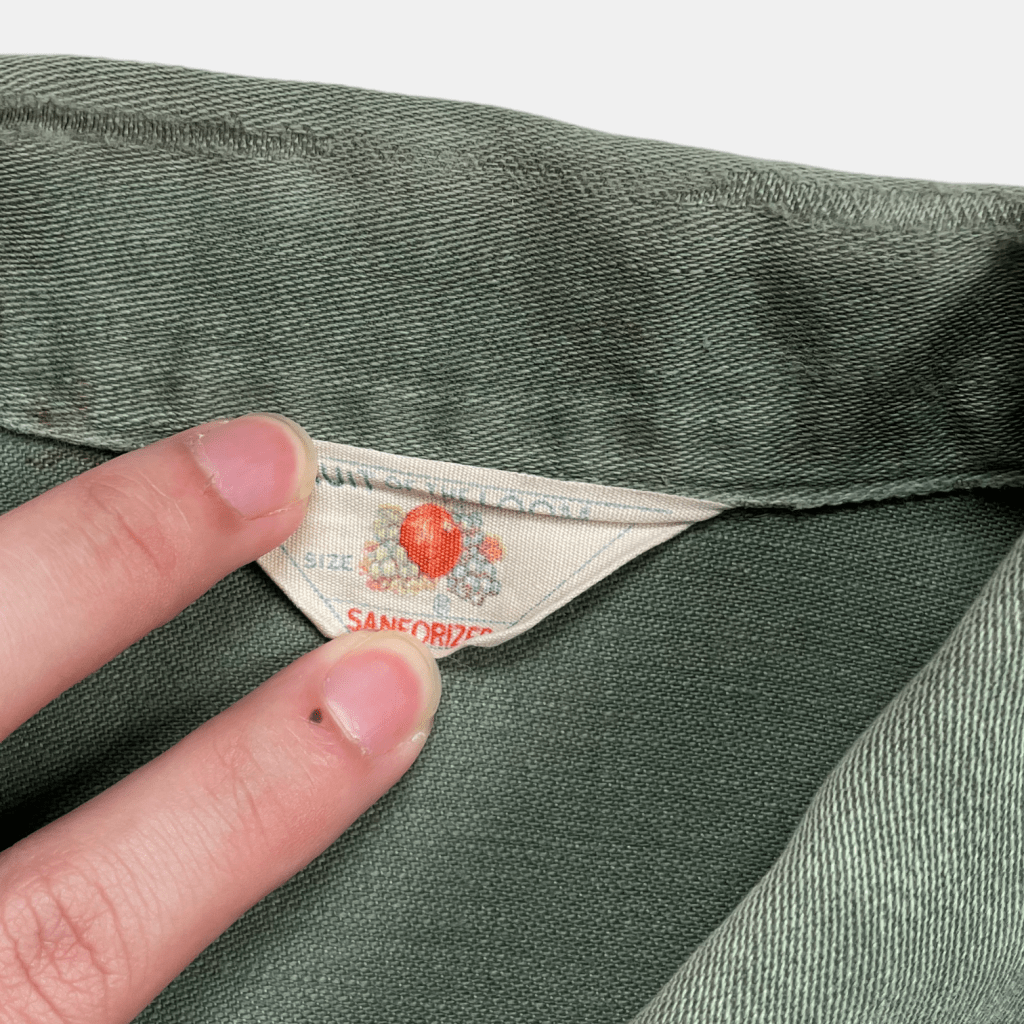
While the overall design and features remain the same as the standard issue, there may be slight variations in quality and fit due to different manufacturers.
2. Tailor-made: often referred to as privately purchased from a local tailor. These garments can be custom-made to fit the individual or the tailor may have pre-made items in stock. They are commonly found in theater-specific locations (for example, I personally had a shirt made by Royal Tailors in Thailand).
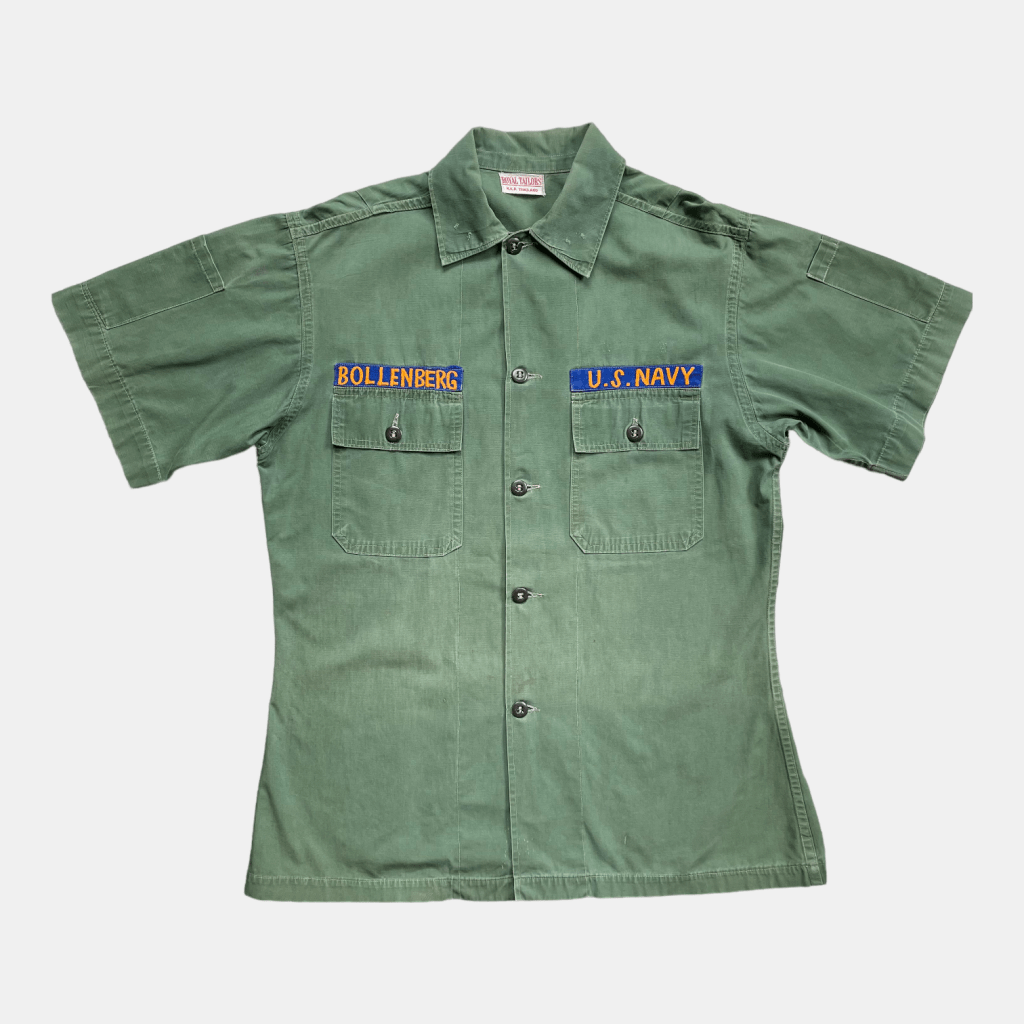
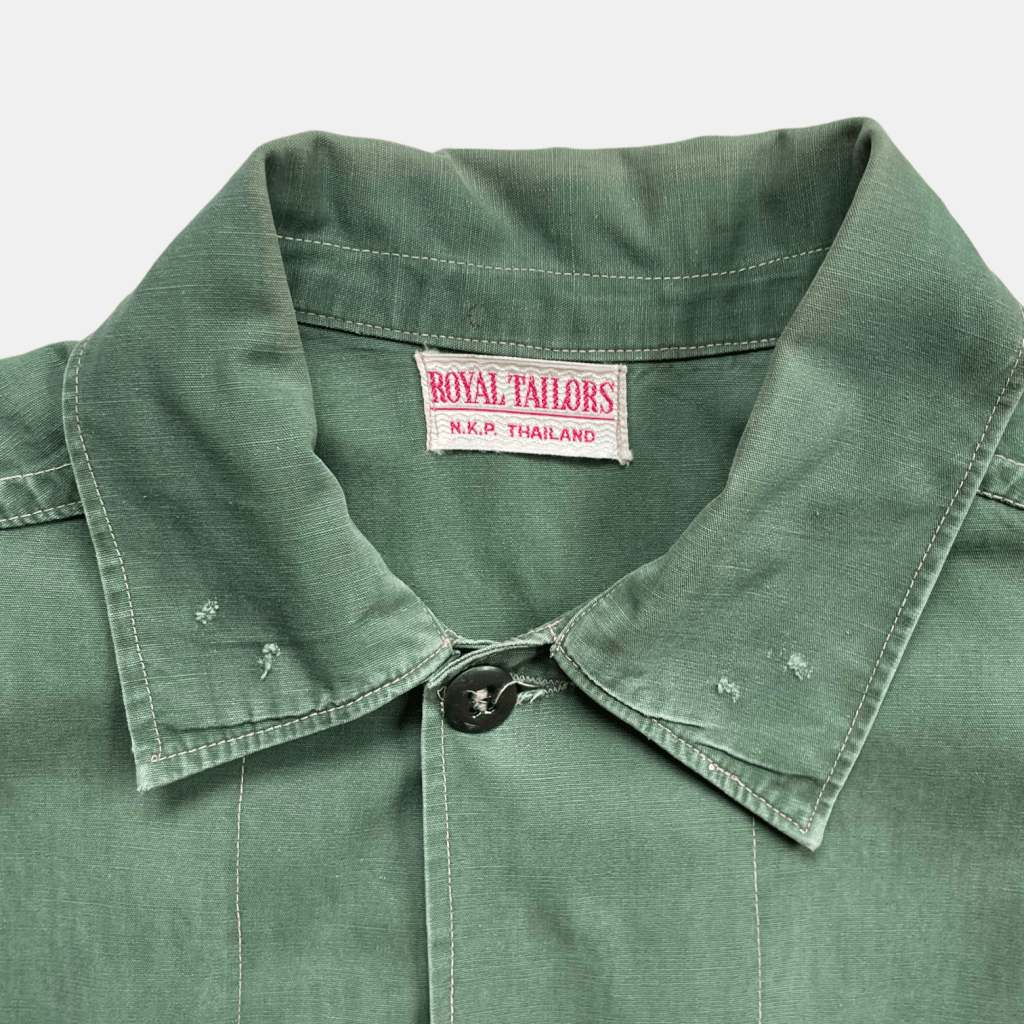
Tailor-made shirts offer a personalized fit and may have additional design elements or modifications according to the wearer’s preferences.
Another example:
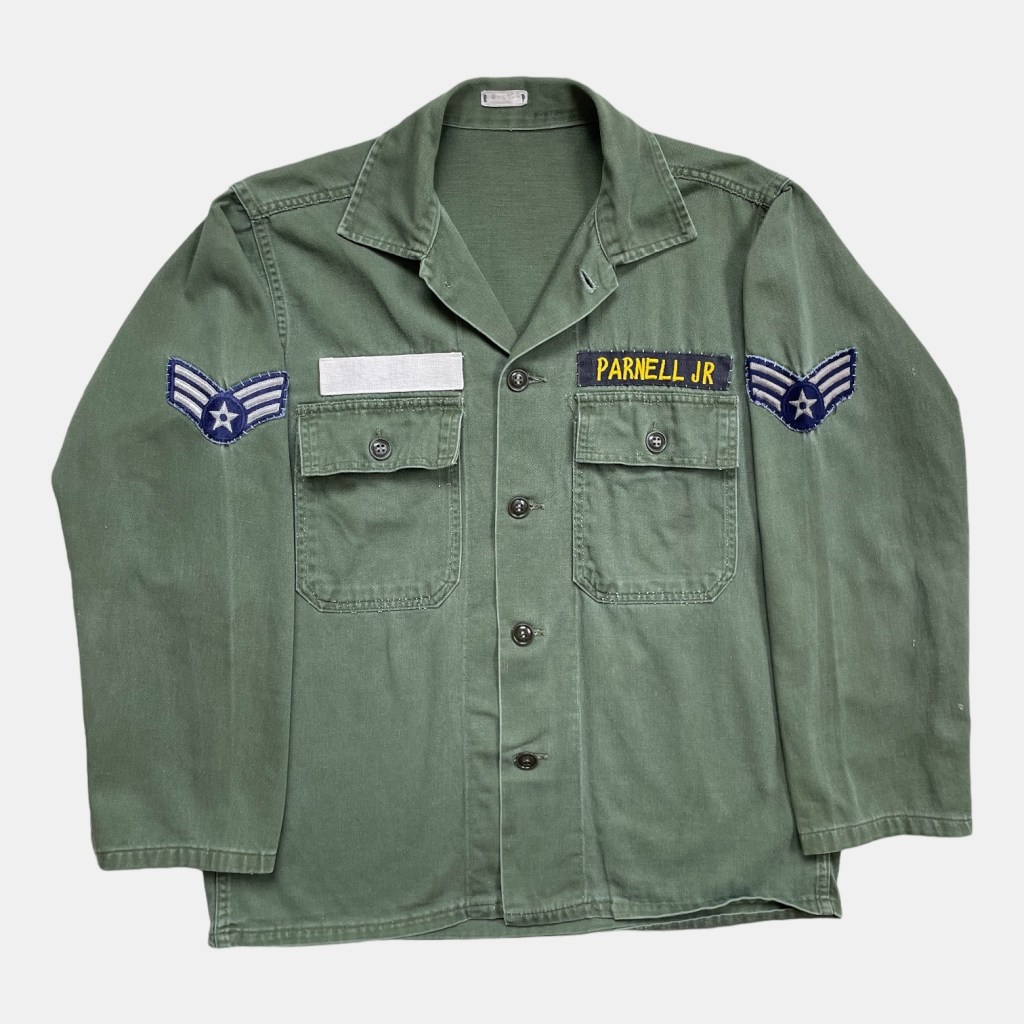
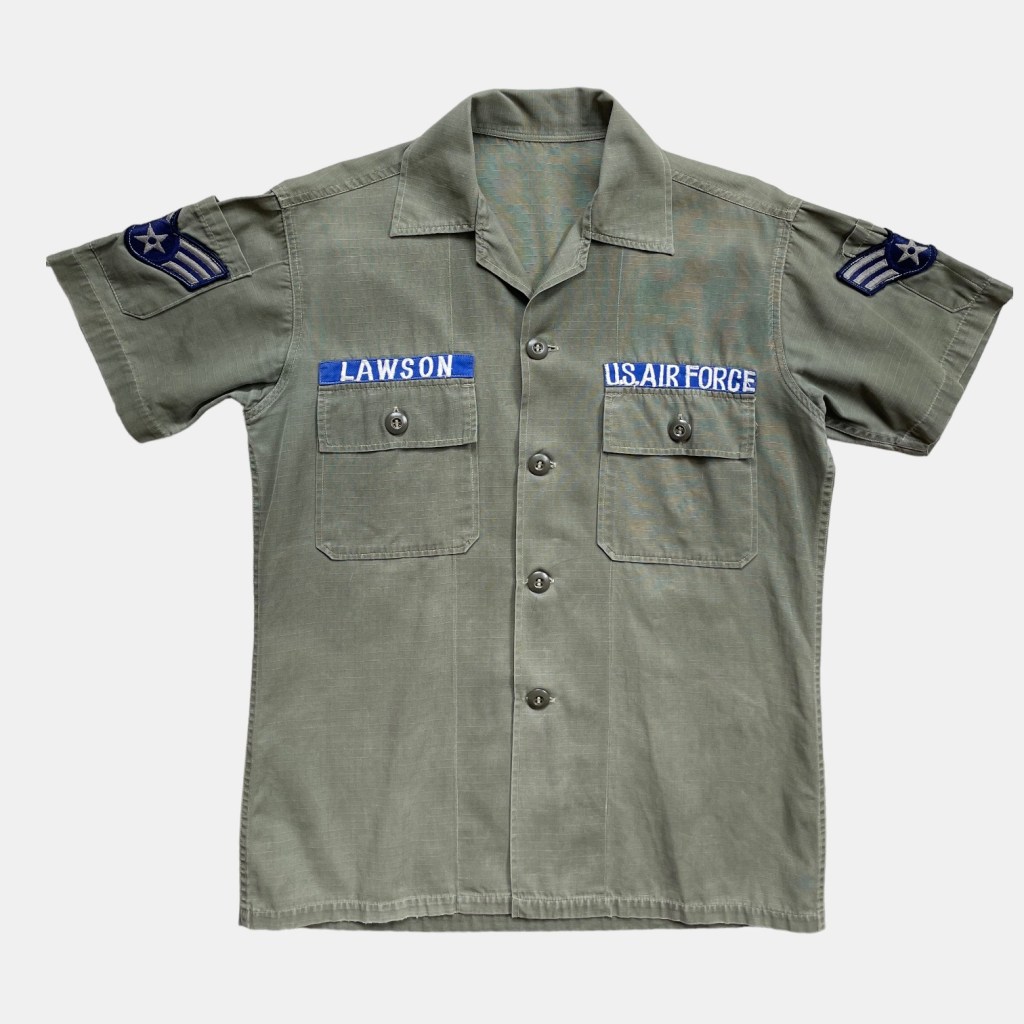
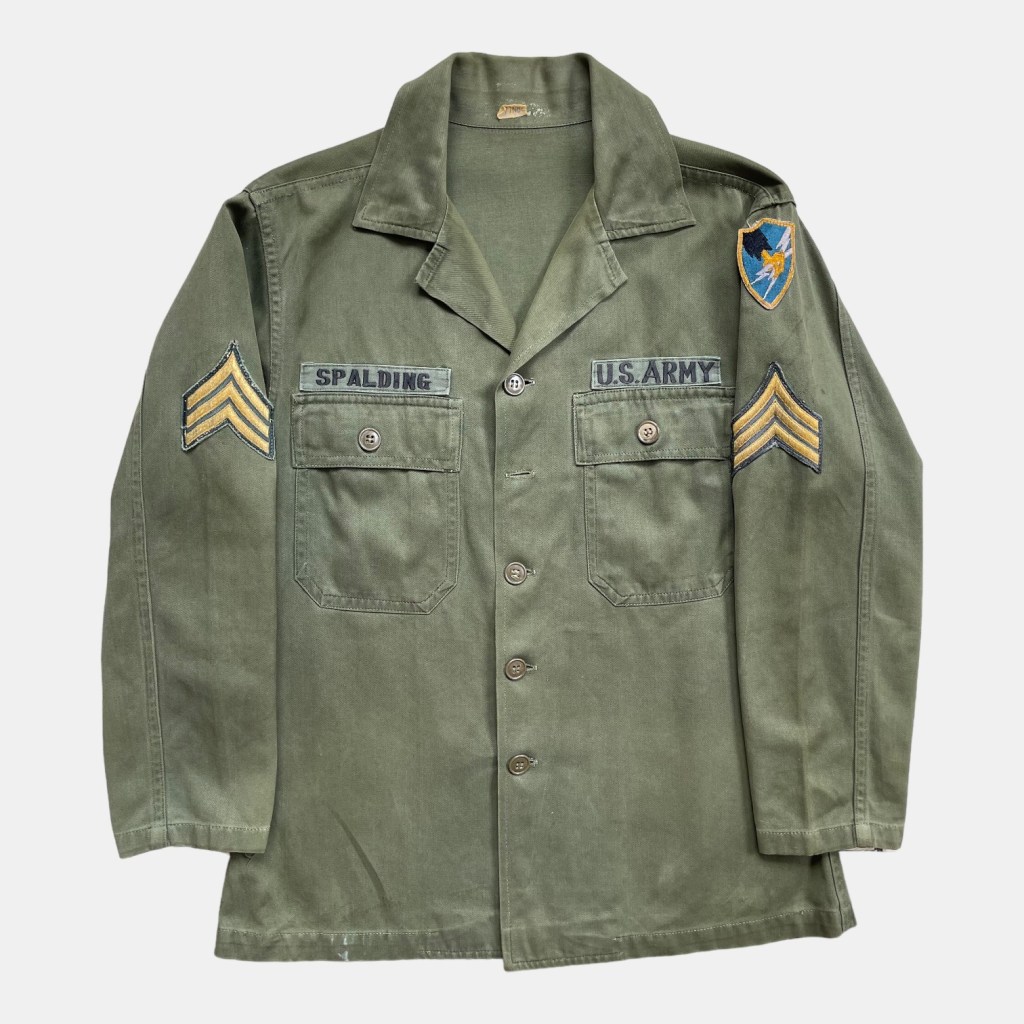
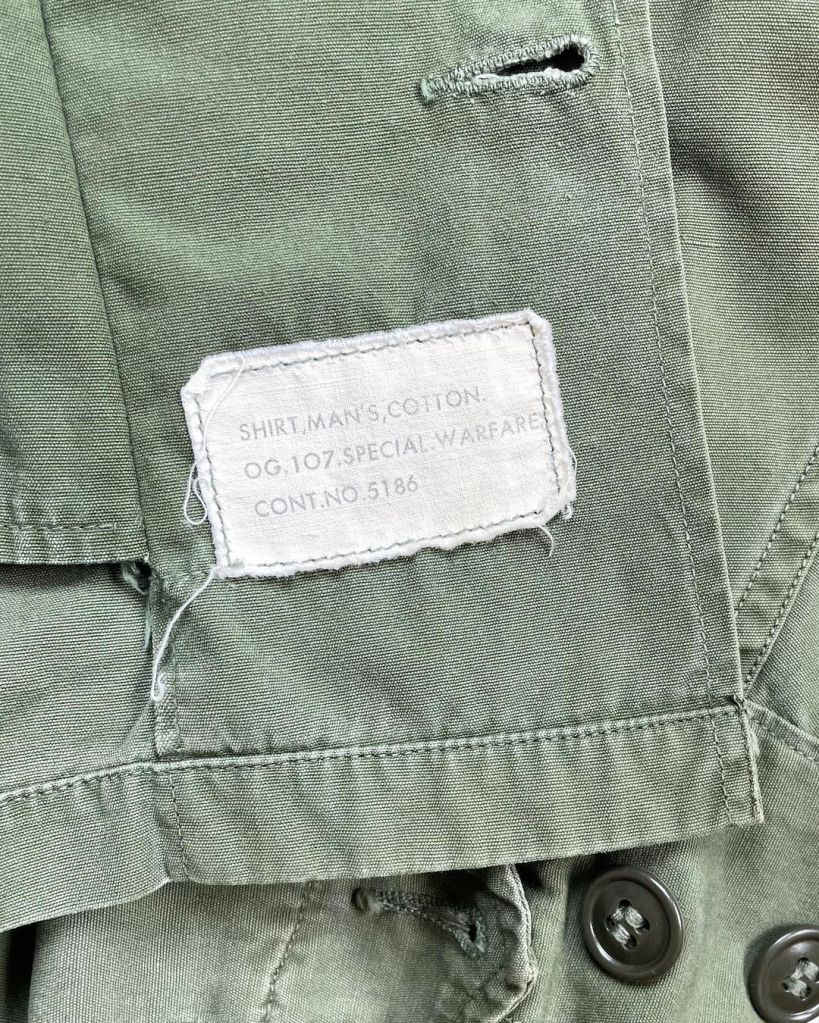
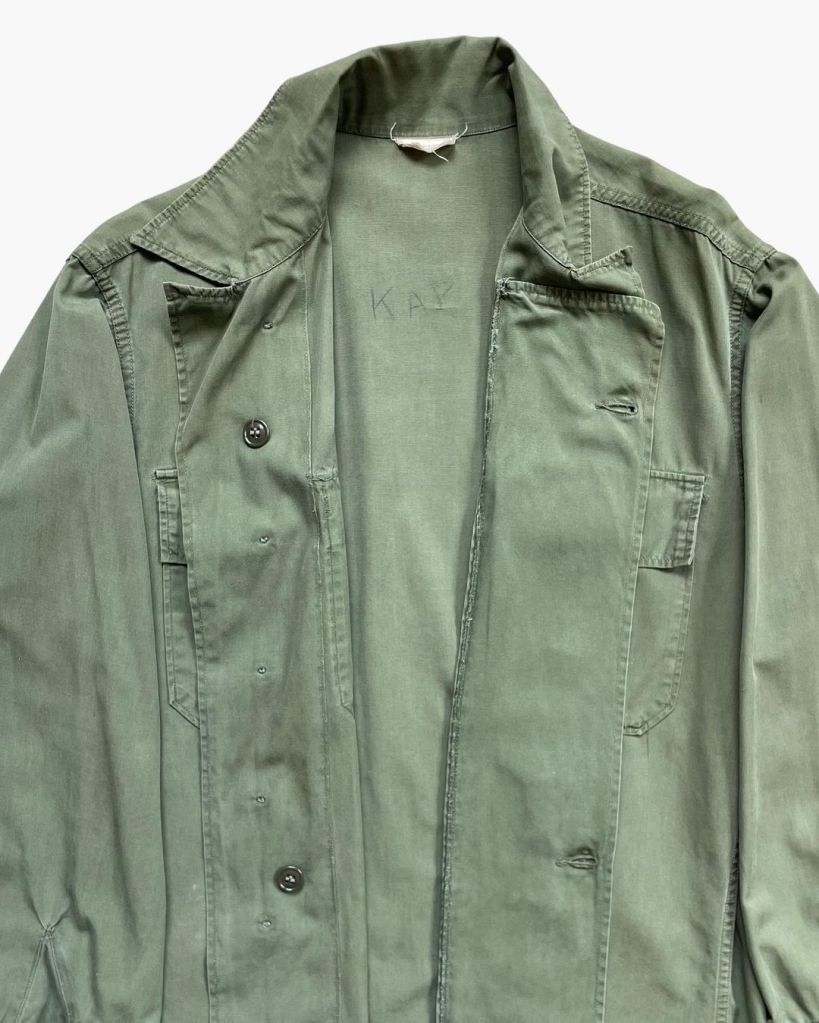
Special Warfare, Experimental Shirt
In the early 1960s, Natick Laboratories developed a prototype/experimental uniform for Special Forces advisors in Southeast Asia. This uniform was based on the OG107 design and introduced the use of poplin cloth, which provided certain advantages in tropical climates.
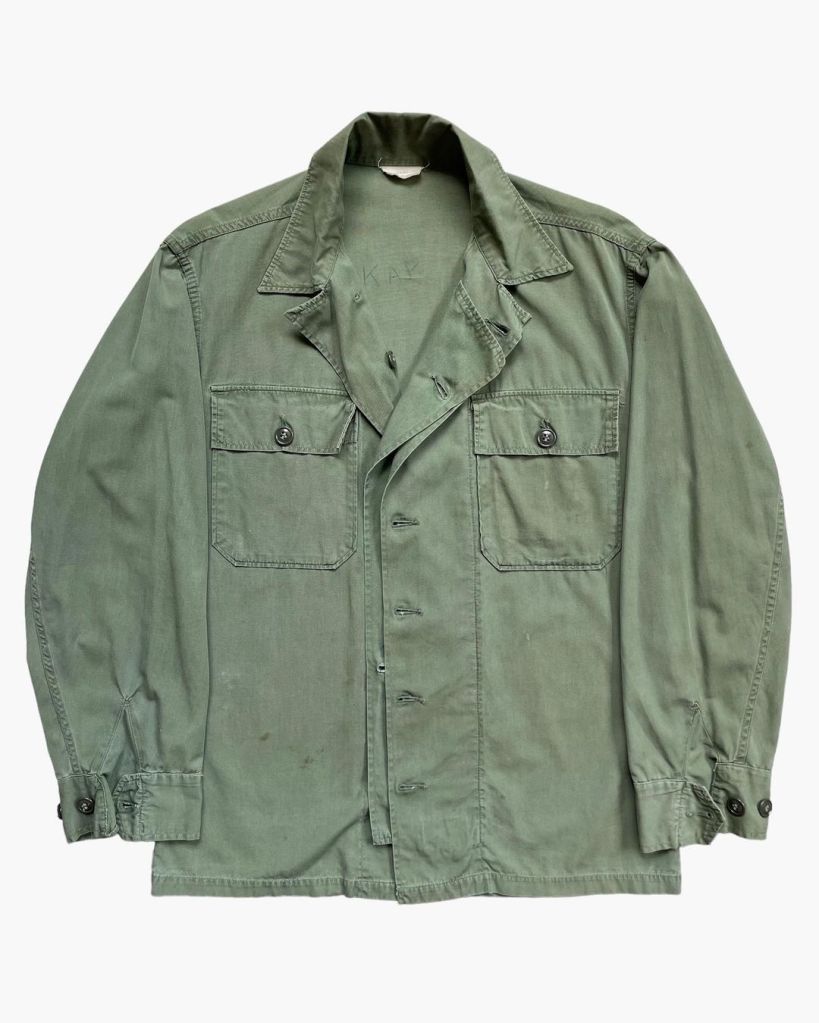
The term “Special Warfare” was used to describe operations conducted in environments beyond the normal temperate climates that the US Army typically prepared for.
It’s important to note that these uniforms were not privately purchased but rather issued to the Special Forces advisors for their specific operational needs in Southeast Asia.
All rights reserved (c), Frownland Archive.
 Arsip Militer
One response to “OG-107 Shirt; Basic Guide”
[…] US OG-107 Type III shirt belonged to R. Soedarwoko – KOSTRAD, from the late 1970s. This uniform was a surplus from US, making its way to Indonesia in the late 1970s when American supplies were still flowing in including the Wine Leaf camouflage. […]
LikeLike